
Could Your Product Become a Service?
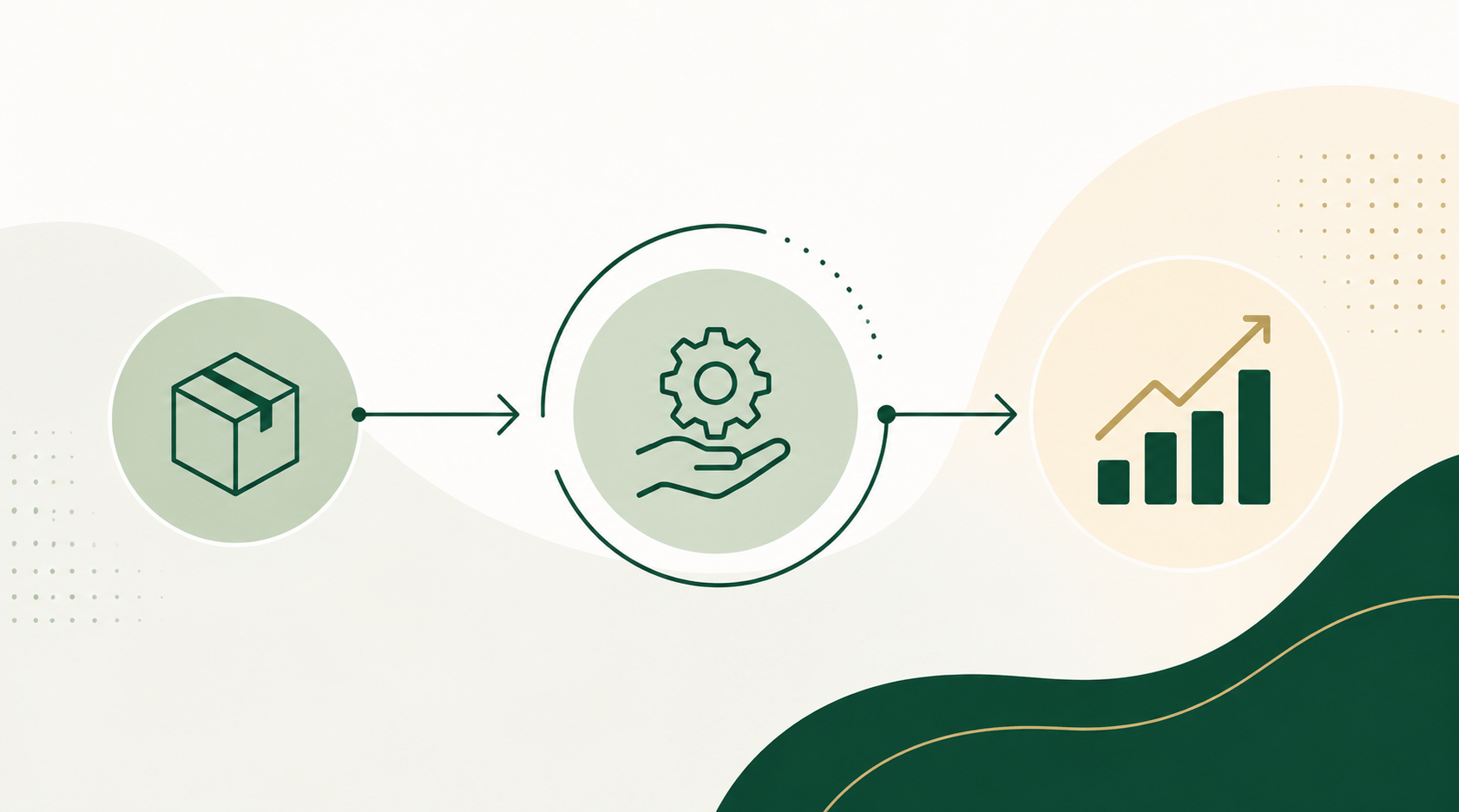
Questions that will get you thinking about a new business opportunity
CERMA Knowledge Hub | Practical Resource
Sometimes customers don’t need to own the product itself, but rather the result they get from using it. In such cases, a business may have the opportunity to offer customers the use of the product, servicing, repair or upgrades instead of a one-time sale.
The questions below are not a test and do not provide ready-made answers. Their purpose is to help you look at your product, your customers and your current revenue model from a different angle.
1. What is your customer really buying?
How important is owning the product itself to your customer? Perhaps what matters most is not the device, but lighting, printing, mobility, getting a specific job done or another result the product delivers.
Think about it: could the customer get the same result without buying the product?
2. What happens after the sale?
If the product requires regular maintenance, repair, replacement of parts or upgrades, these services could become an additional opportunity for your business. In this case, a one-time sale is no longer the end of the relationship with the customer.
Think about it: which services could you offer customers while they use the product?
3. How long does the product retain its value?
Assess how durable your product is and how easily it can be repaired. Can individual components be replaced, upgraded or refurbished? If the product is still usable after its first user, it may still have economic value.
Think about it: could you take back a used product, refurbish it and reuse it, or offer it to another customer?
4. Could a one-time sale become long-term revenue?
A service-based model allows a company to earn revenue not only when the product is sold, but by building a long-term relationship with the customer. This could be based on product use, technical servicing, upgrades or combining several services into a single offer.
Think about it: could a service be built around your product that customers would pay for regularly?
5. What would change if the product remained under your control?
When the provider retains responsibility for how the product performs, the product’s durability, reparability and efficiency take on direct economic importance. The longer and more reliably the product works, the lower the costs of servicing and replacing it may be.
Think about it: would longer product use and product take-back change your costs, revenues or customer relationships?
From question to opportunity
Answering these questions does not yet mean that “product as a service” is the right choice for your business. Determining that requires a detailed assessment of customer demand, product usage costs, technical servicing, take-back options and the financial model.
However, if these questions have shown you your product or current sales model from a different angle, this may be exactly where the opportunity lies to create a new service, long-term customer relationships or a new source of revenue.
What are you selling today — a product, or the value that product creates for your customer?
CERMA helps companies identify and assess circular business opportunities and develop practical business models.