Circular Business Models in Practice: 4 Approaches and Real Examples
CERMA Knowledge Hub | Circular Economy in Practice
The circular economy offers businesses an opportunity to look at the use of products and resources differently. Revenue does not have to depend solely on producing and selling new products — value can be created by extending a product’s useful life, renting it out, reusing and refurbishing it, and returning materials to production.
Circular business models are based on these principles. Their goal is to extend the product life cycle and enable businesses to create additional value from resources that already exist.
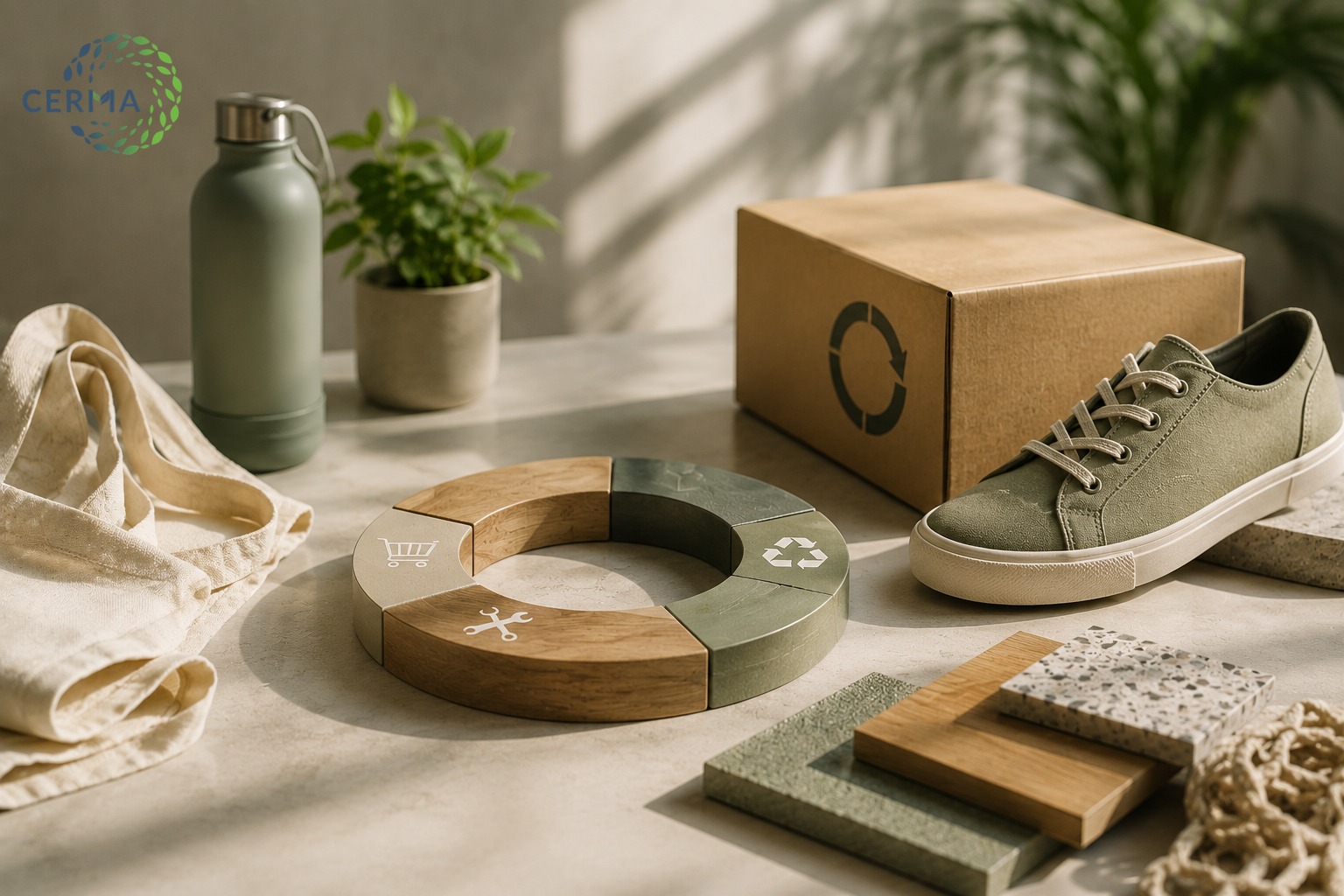
The European Environment Agency’s (EEA) 2026 review identifies four main types of circular business models: durable, long-lasting products; access to products instead of ownership — renting, leasing and sharing; reuse and remanufacturing; and recycling and the reuse of materials.
1. Extending the product life cycle
This model is based on creating and offering durable products that can be maintained, repaired or upgraded.
For a business, this means that the relationship with the customer does not end with the sale. The company can develop technical servicing, repairs, spare parts supply or upgrade services, thereby extending the product’s life cycle.
Practical example — Patagonia
Patagonia’s Worn Wear programme helps extend product life through care and repair. The company offers customers repair services and self-repair guides, and the Worn Wear platform makes it possible to return and resell used Patagonia items.
In this example, value is created through the longer use of an item that has already been produced: repair reduces the need for premature replacement, while resale returns the product to the life cycle with a new customer.
2. Access to products instead of ownership
Customers don’t always need to own the product itself — often what matters most to them is the function or result the product provides.
Rental, leasing, sharing and service-based models are built on this principle. The customer gets access to the product or a specific service, and a one-time purchase is no longer necessary. The EEA notes that such models are particularly well established in business-to-business relationships, for example in the hotel and healthcare sectors (linen and workwear rental services).
Practical example — Signify
In Signify’s Light as a Service model, the company offers customers a complete lighting service — from system design and installation to its management and maintenance. According to Signify’s official description, the model requires no upfront capital investment from the customer, and the service terms are linked to pre-agreed results and system performance.
This approach illustrates the essence of a service-based model well: a business can offer customers not just a device, but the function and result it delivers — which is what people are paying for.
3. Reuse and refurbishment
When a product’s first user stops using it, that does not always mean the end of its usefulness.
A company can take a product back, assess its condition, repair and refurbish it where necessary and offer it on the market again. Individual components can also be restored and reused.
In this way, the value of a product that has already been made is retained for longer, and the need for additional resources to make new products is reduced.
Practical example — IKEA
IKEA’s Buy Back & Resell service allows customers in participating markets to sell eligible used IKEA furniture back to the company. After the product’s condition has been checked, the customer receives appropriate compensation, and items fit for resale are sold again.
In this case, the end of one customer’s need for an item does not mean the end of the product’s life — usable furniture continues its life cycle with a new customer.
4. Returning materials to production
Not every product can be repaired, refurbished or reused. In such cases, value can continue to be retained through recycling.
Collecting, sorting and processing used products allows the resulting secondary materials to return to production and replace part of the primary raw materials.
For this model to be effective, a well-functioning take-back system, appropriate infrastructure and cooperation between value chain participants are especially important.
Practical example — Interface
The floor covering manufacturer Interface created its ReEntry programme in 1995. Under the programme, the company collects used carpet tiles and, depending on their condition, chooses the appropriate route — reuse, recycling or another recovery method.
Interface’s technical documentation cites, as one example of recycling, the return of used carpet tile material into new material of the same value — including “carpet tile to carpet tile” production. This example shows how a take-back system can become part of the production cycle.
What are the benefits for business?
Introducing a circular business model is not only about reducing environmental impact. The right approach can give a company the opportunity to:
- reduce the consumption of and dependence on primary raw materials;
- extend the period of product use;
- develop additional services and new sources of revenue;
- strengthen long-term customer relationships;
- use resources that have already been purchased or produced more efficiently;
- prepare better for requirements related to product durability, reuse and resource efficiency.
However, there is no one-size-fits-all model. What works for a clothing manufacturer may be completely different for a company in the furniture, equipment, construction materials or services sector.
Which model could fit your business?
Discovering circular opportunities often starts with a few simple questions:
- Can the useful life of our product be extended?
- Could repair, upgrades or technical servicing become an additional service?
- Do we have to sell the product, or could we rent it out or offer it as a service?
- Could we take back, refurbish and resell used products?
- Could the product or its materials be returned to production?
Choosing a circular business model does not mean changing your existing business all at once. Often the first step is to review a specific product, service or process and test a new approach on a small scale.
The key is to change the question itself: how can we get more value from products that have already been made and resources that have already been used?
It is from this question that the efficient use of resources and the discovery of new business opportunities can begin.
Sources
- European Environment Agency (EEA) — Scaling circular business models in Europe (2026)
- European Environment Agency (EEA) — A framework for enabling circular business models in Europe (2021)
- Patagonia Worn Wear — Repairs
- Patagonia Worn Wear — Trade In / FAQ
- Signify — Light as a Service
- IKEA — Buy Back & Resell
- Interface — ReEntry Program
Note: This publication was prepared on the basis of European Environment Agency (EEA) materials and official sources of the companies featured and adapted by CERMA.