
Where Does a Resource Lose Its Value?
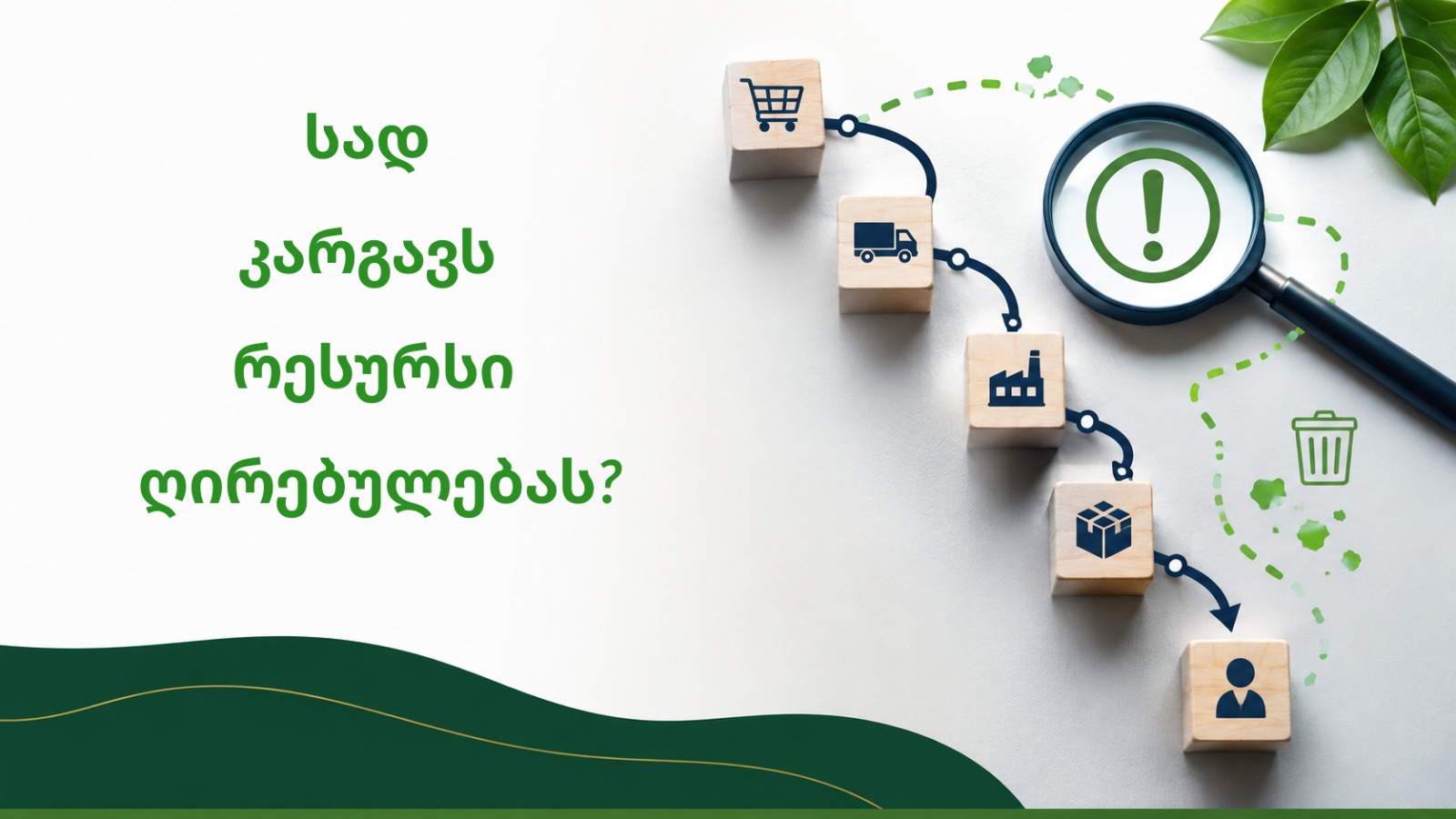
Follow the path of a single resource through your business
CERMA Knowledge Hub | Practical Resource
In business, we often notice a loss only when a material has already spoiled, been damaged, gone unused or turned into waste. However, the place where a loss appears is not always the place where its cause originated.
For example, expired products in a warehouse may be the result of over-purchasing, leftover material in production may result from poor process planning, and food waste may come from the quantity prepared or the portion size.
1. Choose one resource
Don’t try to assess the whole business at once. To begin with, choose one specific material or product that you use frequently or whose losses you regularly see.
It could be a raw material, a food product, packaging, a construction material, a spare part or a finished product.
For example: not “packaging” but a specific cardboard box; not “food” but bread; not “raw materials” but one specific material.
2. Follow its life path
Write down the stages the chosen resource goes through in your business. Describe the real process.
Purchasing → Receiving → Storage → Processing / Use → Sale or final output
In your business, this path may be shorter or more varied. Where needed, involve the employees who work with this resource every day — they often know best where delays, overconsumption or losses occur.
3. Mark where losses occur
Look at each stage separately and mark where part of the resource can no longer be used for its original purpose.
During purchasing — we bought more than we needed;
During receiving — part of it turned out to be damaged or not as required;
During storage — the product spoiled, expired or was damaged;
During production or processing — defects, offcuts or unused material were generated;
During packaging — more material is used than necessary;
During sales — the product didn’t sell and remained in stock.
Don’t try to solve the problem at this stage yet. Simply mark where you see losses.
4. Look for the cause one step earlier
Go back to the place where you found the loss and look at the previous stage as well. The cause of a loss often lies where nothing seems to be visible.
If a product spoiled in the warehouse, the cause may not be the storage conditions alone — perhaps we bought more than we needed in the first place. If a particular dish is often left over in a restaurant, the cause may be the portion size, the quantity prepared or the menu planning. If offcuts of the same material constantly remain in production, the cause may lie in the production process itself, the product dimensions or the planning of material use.
The key principle
The place where we see a loss is not always the place where its cause originated.
5. Identify the point of change
Once you find the likely cause, don’t focus only on the loss that has already occurred. It is more important to determine what can be changed at an earlier stage of the process so that the loss is reduced or doesn’t occur at all.
The change could be specifying purchase quantities more precisely, better inventory planning, changing storage conditions, a small adjustment to the production process, reducing the amount of packaging or reusing leftover material.
The goal is not to change the entire process in one day. At the first stage, it is enough to find one specific point where a small change can bring real results.
What could this look like in practice?
What we see: expired products remain in the warehouse every month.
Where the loss appears: in the warehouse.
One step back: how many products did we buy, and on what basis did we determine the quantity?
What we find: purchase quantities regularly exceed actual sales.
Where change can start: not with waste removal, but with purchasing and inventory planning.
If this simple observation reveals a loss whose volume, real cost or root causes require deeper analysis, that is already the next stage.
CERMA helps companies assess resource flows and losses, identify their root causes and determine opportunities for more efficient resource management.
Methodological basis
This resource is based on the practical approaches of Value Stream Mapping and Material Flow Mapping and has been adapted by CERMA into a simple initial analysis format for businesses.
Sources: U.S. Environmental Protection Agency — Lean & Environment Toolkit: Value Stream Mapping; International Organization for Standardization — ISO 14051:2011, Material Flow Cost Accounting.